We just shipped two free, public tools for HMIS data people.
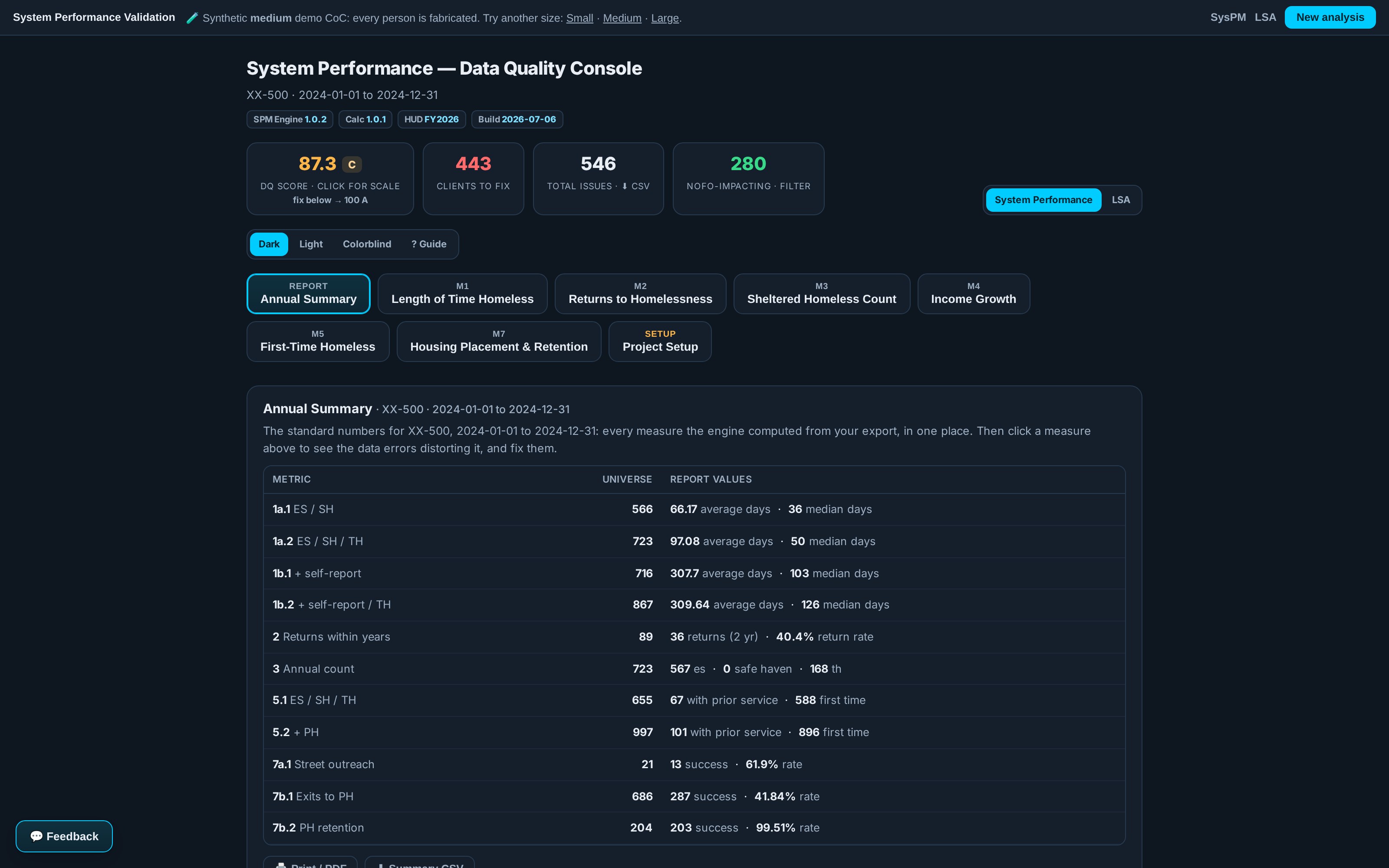
System Performance console (syspm.gaitherdyn.com): upload a hashed HUD CSV export, pick any reporting year (calendar or federal fiscal), and get your System Performance Measures as a printable annual summary. Then click into any measure to see the data errors distorting it, ranked by how much they hurt.
LSA data quality console (lsa.gaitherdyn.com): the same workflow pointed at the Longitudinal System Analysis: the household, move-in, destination, and demographic problems that make LSA submissions bounce.
What makes these different from the reports you already have:
- A data quality score with a letter grade, scored the way CoC report cards actually work, and recalculated live as you fix things.
- Every error report explains why it matters and exactly how to fix it, grounded in HUD’s own System Performance improvement guidance.
- A “clients that need fixing first” list for every measure: the exact clients costing you the most points, one click from the fix instructions.
- Check clients off as you correct them in your HMIS and watch the grade climb. Or download the whole fix list as a CSV and hand it to your data team.
Privacy is the whole design. Your upload is analyzed in a single request and deleted before the results page even loads: nothing stored, no accounts, no database. That is also why the tools only accept hashed exports. Want to try before uploading anything? Both sites include fully synthetic demo CoCs (small, medium, and large) so you can walk the entire workflow with fabricated data.
The tools are free and provided as-is; validate anything important against your HMIS vendor’s official reports. They were built by Gaither Dynamic working with Anthropic’s Claude Fable 5, with the calculation engine validated against real vendor reports along the way.
Try them, then hit the Feedback button in the corner and tell us what to build next.